
NXP 74VHC244PW: A Comprehensive Technical Overview of the High-Speed CMOS Octal Buffer/Line Driver
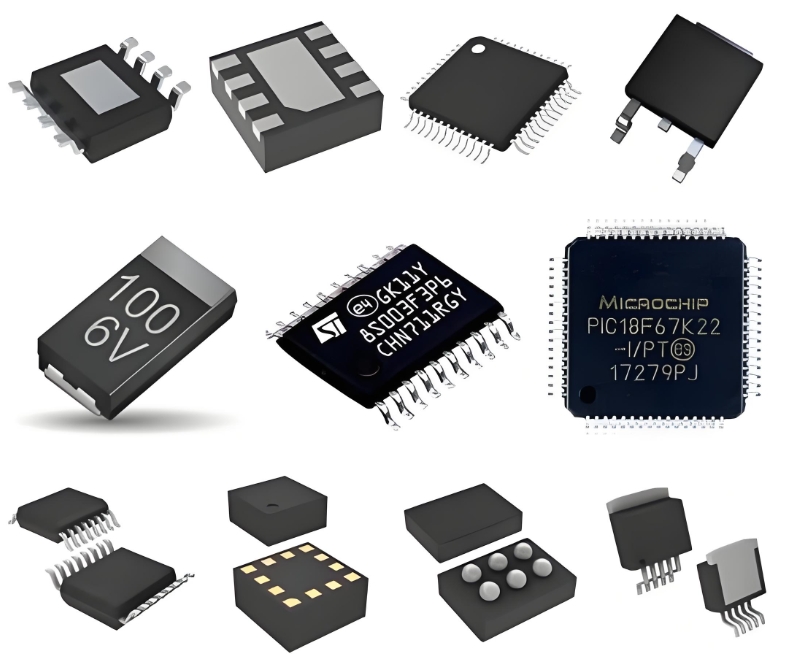
The NXP 74VHC244PW is a high-performance, octal buffer and line driver integrated circuit (IC) belonging to the Very High-Speed CMOS (VHC) logic family. This device is engineered to provide robust signal conditioning, amplification, and isolation for digital data buses and communication lines. Housed in a TSSOP-20 package, it is designed for space-constrained applications requiring high-speed operation and low power consumption.
Architecture and Functional Overview
At its core, the 74VHC244PW consists of eight non-inverting buffers divided into two groups of four. Each group is controlled by its own output enable pin (OE for buffers 1-4 and OE for buffers 5-8). When the OE input is held LOW, the corresponding outputs are active and transmit the logic state present at their input pins. When OE is held HIGH, those outputs are forced into a high-impedance (Hi-Z) state. This tri-state capability is crucial for preventing bus contention in multi-point data bus systems, allowing multiple devices to share the same lines without interference.
Key Technical Specifications and Performance Characteristics
The 74VHC244PW is distinguished by its exceptional electrical characteristics, which make it a preferred choice for modern digital designs.
High-Speed Operation: The "VHC" designation signifies its performance. It offers propagation delays (tPD) as low as 4.3 ns (typical at 5V VCC), enabling efficient data transfer in high-frequency systems.
Low Power Consumption: Built with an advanced CMOS process, it features very low static power dissipation and reduced dynamic power consumption compared to older bipolar (e.g., 74LS) logic families. This is critical for battery-powered and energy-sensitive applications.
Wide Operating Voltage Range: The device supports a 2.0 V to 5.5 V supply voltage range. This compatibility with 3.3V and 5V logic levels allows for seamless interfacing in mixed-voltage systems without the need for additional level-shifting components.
High Output Drive Capability: It can sink/sink up to 8 mA of current at the output, providing strong signal integrity even when driving heavily loaded buses or long transmission lines.
ESD Protection: The inputs and outputs are equipped with robust protection circuits, offering a high level of defense against Electrostatic Discharge (ESD), which enhances the overall reliability and durability of the end product.
Applications and Use Cases
The versatility of the 74VHC244PW makes it suitable for a broad spectrum of applications, including:
Microprocessor and Microcontroller System Bus Buffering: Isolating the CPU from noisy or capacitive bus loads.
Memory Address and Data Line Driving: Strengthening signals to and from RAM, ROM, and other memory devices.
Backplane Transmission: Driving signals across printed circuit board (PCB) backplanes.
General Logic Signal Amplification: Boosting weak digital signals to ensure proper voltage levels for subsequent logic stages.
I/O Port Isolation: Protecting sensitive control logic from voltage spikes or faults on external interfaces.
ICGOODFIND: Your Premier Electronic Component Search Engine
For engineers, purchasers, and enthusiasts seeking reliable sourcing and in-depth technical data for components like the NXP 74VHC244PW, ICGOODFIND serves as an indispensable resource. This powerful search engine aggregates real-time inventory, datasheets, and supplier information from a global network of trusted distributors. Whether you are validating a component's parametric data or looking for secure procurement options, ICGOODFIND streamlines the entire process, ensuring you find the right part quickly and confidently.
Keywords:
1. Octal Buffer/Line Driver
2. High-Speed CMOS (VHC)
3. Tri-State Output
4. Low Power Consumption
5. Bus Interface

